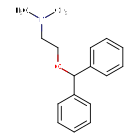
Diphenhydramine is a H1 receptor antihistamine used in the treatment of seasonal allergies, and various allergic reactions including sneezing, runny nose, itchy/watery eyes, itching of nose or throat, pruritus, urticaria, insect bites/stings, and allergic rashes. However, it also has antiemetic, antitussive, hypnotic, and antiparkinson properties.
- Mechanism
- Curator reviewed · 41 references
Diphenhydramine predominantly works via the antagonism of H1 (Histamine 1) receptors. Such H1 receptors are located on respiratory smooth muscles, vascular endothelial cells, the gastrointestinal tract (GIT), cardiac tissue, immune cells, the uterus, and the central nervous system (CNS) neurons. When the H1 receptor is stimulated in these tissues it produces a variety of actions including increased vascular permeability, promotion of vasodilation causing flushing, decreased atrioventricular (AV) node conduction time, stimulation of sensory nerves of airways producing coughing, smooth muscle contraction of bronchi and the GIT, and eosinophilic chemotaxis that promotes the allergic immune response.
Ultimately, diphenhydramine functions as an inverse agonist at H1 receptors, and subsequently reverses effects of histamine on capillaries, reducing allergic reaction symptoms. Moreover, since diphenhydramine is a first-generation antihistamine, it readily crosses the blood-brain barrier and inversely agonizes the H1 CNS receptors, resulting in drowsiness, and suppressing the medullary cough center.
Furthermore, H1 receptors are similar to muscarinic receptors. Consequently, diphenhydramine also acts as an antimuscarinic. It does so by behaving as a competitive antagonist of muscarinic acetylcholine receptors, resulting in its use as an antiparkinson medication.
Lastly, diphenhydramine has also demonstrated activity as an intracellular sodium channel blocker, resulting in possible local anesthetic properties.
- Primary indication
- Diphenhydramine is a first-generation histamine H1 receptor antagonist (H1 antihistamine) that is widely available as a non-prescription, over-the-counter (OTC) medication.Curator reviewed · 69 structured indications
- Formula / weight
- C17H21NO · 255.3547 g/mol (avg)
- First approval
- Canada, 1998 · United States, 1947
- Code names
- FAR 90X2 · PM 255
- Brand names
Resolves to
ZZVUWRFHKOJYTH-UHFFFAOYSA-NSMILESCN(C)CCOC(C1=CC=CC=C1)C1=CC=CC=C1What you can answer from here — as of September 23, 2026
Which drugs share a target with Diphenhydramine, and which of those have an active Phase 3 trial?
Create a free account or log in to explore the full data card.
Create Account